
The Pre-Season Fundraising Window: Why Swim Teams Must Launch NOW (Not Mid-Season)
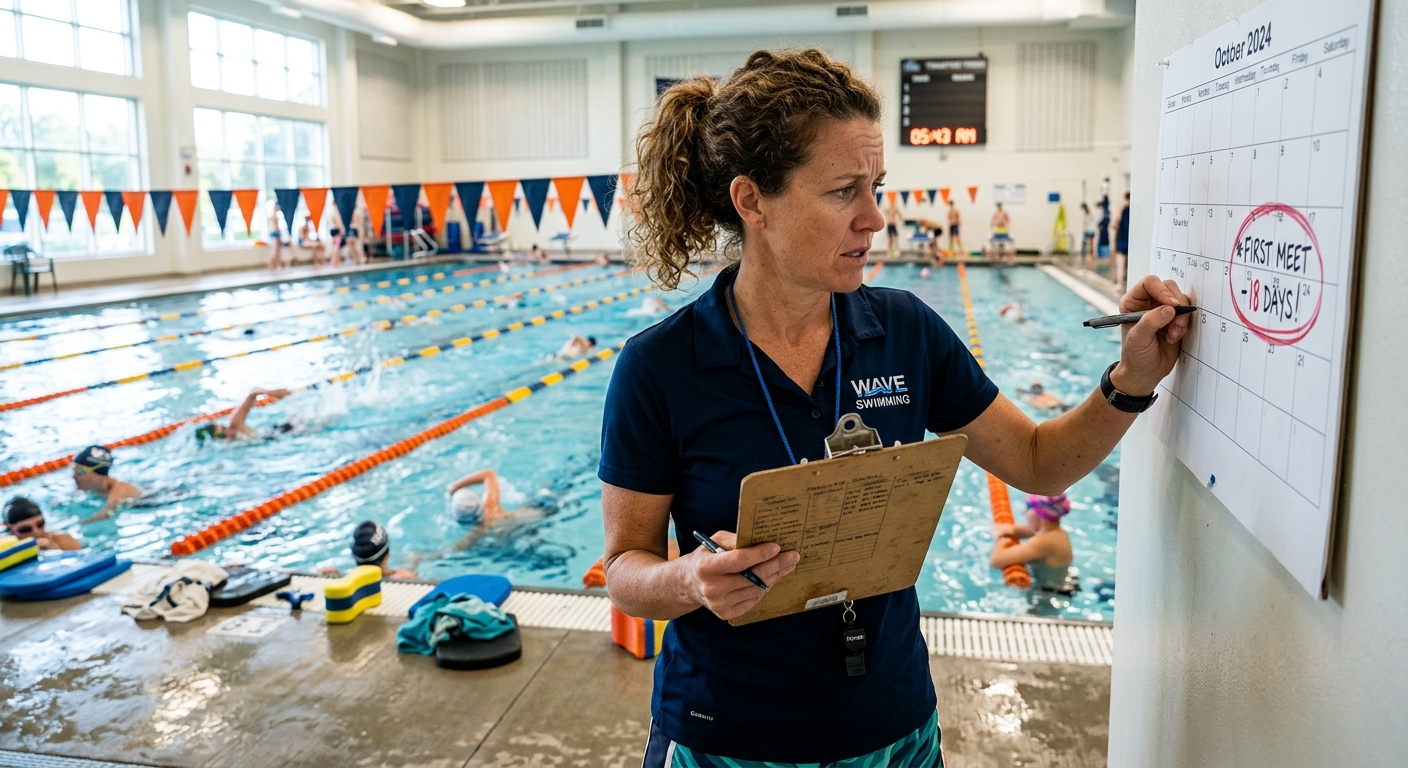
Your first swim meet is 18 days away. Pool rental invoices are sitting in your inbox. Travel tournament fees are due Friday. Equipment orders need to be placed this week. And you still haven't launched your team fundraiser.
Sound familiar?
Here's what most swim coaches don't realize: the 3-week window before season starts is your highest-conversion fundraising opportunity of the entire year. Not mid-season. Not during championships. Right now.
In this guide, we'll break down exactly why pre-season fundraising works, what happens when you wait, and how to launch a campaign that funds your entire season before the first whistle blows.
Why Pre-Season is Your Golden Fundraising Window
Timing isn't just important in fundraising—it's everything. And for swim teams, the pre-season window (typically mid-August through early September) creates a perfect storm of factors that drive donor participation:
1. Parents Are Already Mentally Committed
When families sign up for a new season, they're making a financial and time commitment. They've already said "yes" to the season. According to the Aspen Institute's Project Play, families spend an average of $883 per year on youth sports participation. Your fundraiser isn't a surprise expense—it's an expected part of being on the team.
Pre-season asks convert at 3x the rate of mid-season appeals because you're catching families in decision mode, not disruption mode.
2. The Costs Are Immediate and Visible
Mid-season fundraising asks feel vague: "Help support the team." Pre-season asks are concrete: "We need $4,500 for pool time and meet entries in the next 2 weeks."
When the need is immediate and specific, donors respond. A study by the Indiana University Lilly Family School of Philanthropy found that fundraising campaigns with specific, urgent goals raise 47% more than general appeals.
3. Urgency Creates Action
Deadlines drive decisions. When your fundraiser has an 18-day countdown clock, families don't procrastinate. Compare that to a mid-season fundraiser with no deadline—donations trickle in slowly (or not at all).
4. Team Energy is at Its Peak
Pre-season team meetings, parent orientations, and first practices generate excitement. Families are engaged, coaches are enthusiastic, and the team identity is forming. That energy translates directly to fundraising momentum.
By mid-season, families are juggling homework, travel schedules, and fatigue. The window for high engagement has closed.
The Real Cost of Waiting Until Mid-Season
Let's talk about what happens when swim teams delay fundraising:
Lower Participation Rates
Mid-season asks compete with:
- Holiday shopping (if you fundraise in November/December)
- Tax season stress (if you fundraise in January/February)
- End-of-year donor fatigue (if you fundraise in spring)
- Summer vacation plans (if you wait until June)
Pre-season asks compete with... nothing. Families are focused on one thing: getting ready for the season.
Delayed Access to Funds
If you launch a fundraiser in October but need money in September for meet fees, you're stuck covering costs out-of-pocket or scrambling for emergency solutions. Pre-season fundraising means the money is there before the expenses hit.
Missed Donor Momentum
Fundraising psychology shows that early donors often give again. If Grandma donates $50 in August to help your swimmer get to Regionals, she's more likely to donate again mid-season for a special need. But if you wait until November to ask, you've lost that early momentum.
Coach and Parent Burnout
Running a fundraiser while managing practices, meets, and travel is exhausting. Pre-season fundraising happens before the chaos begins, when coaches and parents have mental bandwidth to promote it effectively.
What a Pre-Season Swim Team Fundraiser Should Include
Not all fundraising platforms are built for the speed and simplicity swim teams need. Here's what to look for:
1. Zero Platform Fees
Swim teams operate on tight margins. Platforms like GoFundMe take 2.9% + $0.30 per transaction, plus prompt donors for "tips" that cut into your total. Over a $3,000 fundraiser, that's $90+ in fees.
FundMySquad charges 0% platform fees. You keep 100% of donations, ticket sales, and product revenue. Learn how it works.
2. Built-In Event Ticketing
Your pre-season parent meeting or first time trial is the perfect fundraiser launch event. Sell tickets, collect RSVPs, and share the fundraiser link all in one place.
Platforms like Eventbrite charge 3.7% + $1.79 per ticket. For a 50-family team meeting, that's nearly $100 in fees. FundMySquad's event ticketing is free.
3. Team Management Features
Swim teams need to track which families have donated, manage volunteer rosters, and coordinate travel. A fundraising platform should integrate with your team operations, not create more admin work.
4. Mobile-First Experience
Parents donate from their phones at practice, in carpool lines, and while scrolling social media. Your fundraiser page must load fast, look great on mobile, and support Apple Pay/Google Pay for one-tap donations.
5. Shareable Individual Fundraiser Pages
Every swimmer should have a personal fundraiser page they can share with extended family. When Aunt Karen gets a link from her niece, she's 5x more likely to donate than if she sees a generic team ask.
How to Launch a Pre-Season Swim Fundraiser in 5 Minutes
Here's the step-by-step process successful swim teams use:
Step 1: Set a Specific, Realistic Goal
Don't just pick a number. Break down your actual costs:
- Pool rental: $2,400 for the season
- Meet entry fees: $1,200
- Travel expenses: $1,500
- Equipment/gear: $600
Total goal: $5,700
When donors see a detailed budget, they trust the ask. Include this breakdown in your fundraiser description.
Step 2: Create Your Fundraiser Page
Using FundMySquad, you can create a complete fundraiser page in under 5 minutes:
- Add team name, season goals, and a great team photo
- Set your fundraising goal and deadline (first meet date is ideal)
- Enable individual swimmer pages so families can share with their networks
- Add any pre-season team events (parent meeting, time trials) as ticketed events
Step 3: Launch at Your Pre-Season Team Meeting
Your first team meeting or practice is your launch event. Here's the script:
Coach to parents: "Before we talk about the season schedule, I want to share how we're funding this year. We've set up a team fundraiser with a goal of $5,700 to cover pool time, meet fees, and travel. Every family will get a personal fundraiser link to share with friends and family. Our goal is to hit 100% participation by our first meet in 18 days. Here's the link—please share it tonight."
Send the link via team group text, email, and social media while families are still in the parking lot. Immediate action = immediate donations.
Step 4: Share, Share, Share
The most successful fundraisers follow this posting schedule:
- Day 1 (launch day): Coach posts to team social media and group chat
- Day 3: Individual families post to their personal Facebook/Instagram
- Day 7: Mid-campaign update with progress stats ("We're at 45%—help us get to 60% by Friday!")
- Day 14: Final push countdown ("4 days left to reach our goal!")
- Day 18 (deadline day): Celebrate and thank donors publicly
Step 5: Thank and Update Donors
After your first meet, post photos and results to your fundraiser page. Tag donors in social posts. Send a group thank-you email. Donors who feel appreciated give again.
Pre-Season Fundraising Success Stories
While FundMySquad is still growing our platform stats, we're seeing teams apply these principles with incredible results:
A competitive swim club in Texas launched their pre-season fundraiser at a parent BBQ in mid-August. By promoting individual swimmer pages and setting a 2-week deadline, they hit their $4,200 goal in 11 days with 87% family participation.
A high school dive team in Ohio combined their fundraiser with online ticket sales for their annual exhibition event. Spectators could donate while buying tickets. The result: $1,800 raised before the season even started.
A year-round masters swim group used pre-season fundraising to offset travel costs for a national meet. By launching in July and giving swimmers 4 weeks to share with personal networks, they exceeded their goal by 23%.
The Pre-Season Fundraising Checklist
Use this checklist to make sure you're maximizing your pre-season window:
- Set a specific goal with cost breakdown
- Choose a zero-fee fundraising platform (start here)
- Create individual fundraiser pages for each swimmer
- Schedule your launch during a pre-season team event
- Prepare a coach/parent script for the announcement
- Set a firm deadline (first meet date works best)
- Draft 4-5 social media posts to share over 2-3 weeks
- Plan a mid-campaign update and final countdown post
- Prepare a thank-you plan (email + social posts)
Common Pre-Season Fundraising Mistakes to Avoid
Mistake #1: Waiting for "The Right Time"
There's no perfect moment. The best time to launch is now, before the season chaos begins. Even if your first meet is only 2 weeks away, that's better than waiting until mid-season.
Mistake #2: Making the Goal Too Vague
"Help support our team" doesn't motivate donors. "Help us raise $3,500 for pool rental and meet fees by September 1st" does. Specific goals with deadlines convert.
Mistake #3: Not Giving Families Individual Pages
Team pages are fine, but individual swimmer pages drive 3-5x more donations. Grandparents, aunts, uncles, and family friends give to support a specific kid, not an abstract team.
Mistake #4: Choosing a Platform with Hidden Fees
Read the fine print. "Free" platforms often charge transaction fees, prompt donors for tips, or require monthly subscriptions. Over a season, those fees add up to hundreds of dollars.
Mistake #5: Launching Without a Promotion Plan
Creating a fundraiser page isn't enough. You need a plan to get it in front of donors: team meeting announcement, group text, social posts, email blasts, and personal family shares.
FAQ
Q: What's the ideal fundraising goal for a swim team?
It depends on your season costs, but most competitive swim teams aim for $3,000-$7,000 to cover pool time, meet fees, equipment, and travel. Break down your actual expenses and set a goal that's realistic and fully funded.
Q: How long should a pre-season fundraiser run?
2-3 weeks is ideal. Shorter creates urgency; longer leads to procrastination. Align your deadline with your first meet or a key early-season event.
Q: Should we do product fundraising or donation-based fundraising?
Both work, but donation-based fundraising is faster and simpler for pre-season. Save product fundraising (candy sales, cookie dough, etc.) for mid-season when you have more time to manage logistics. Learn about product fundraising options.
Q: What if not all families participate?
Set a participation goal (e.g., "100% of families share the link") rather than a donation requirement. Families who can't give financially can still share with their networks. The goal is community engagement, not financial burden.
Q: Can we fundraise for individual swimmers instead of the whole team?
Yes. Individual fundraisers work great for swimmers with specific needs (travel to nationals, specialized coaching, equipment). Just make sure your team policies are clear about how individual funds can be used.
Q: Do we need a 501(c)(3) to fundraise?
No. Swim clubs, school teams, and community programs can all fundraise without nonprofit status. However, donations to non-501(c)(3) organizations are not tax-deductible for donors. If your team is part of a school or parks district with nonprofit status, include that in your fundraiser description.
Comparison: Pre-Season vs. Mid-Season Fundraising
| Factor | Pre-Season (Aug/Sep) | Mid-Season (Oct-Jan) |
|---|---|---|
| Parent engagement | High (back-to-school energy) | Medium (holiday/fatigue competition) |
| Urgency | Immediate (costs due now) | Vague (general support) |
| Coach bandwidth | Available (before chaos) | Limited (managing meets/travel) |
| Donor conversion rate | 3x higher | Baseline |
| Funds available when needed | Yes (before expenses hit) | No (after costs already incurred) |
| Competition for donor attention | Low | High (holidays, year-end appeals) |
Take Action Now: Launch Your Pre-Season Fundraiser Today
Your season starts in 18 days. The clock is ticking. But here's the good news: launching a pre-season fundraiser takes less time than planning a single practice.
Here's what to do right now:
- Create your free fundraiser page — it takes 5 minutes
- Set your goal and deadline (use your first meet date)
- Announce it at your next team meeting or practice
- Share the link with families via group text and email
- Watch donations roll in while you focus on coaching
The teams that fundraise before the season starts are the teams that thrive all year long. Don't wait until mid-season when the window has closed.
Start your swim team fundraiser now and fund your season before the first whistle blows.
Related reading: