The Complete Nonprofit Fall Fundraising Playbook: Events, Auctions, Raffles & Products
Fall is the most critical fundraising season for nonprofits. Between September and November, organizations raise 30% of their annual revenue according to Network for Good's annual report. But here's what most nonprofit directors don't realize: your fall benefit event isn't just an event — it's a revenue opportunity with multiple streams you're probably leaving on the table.
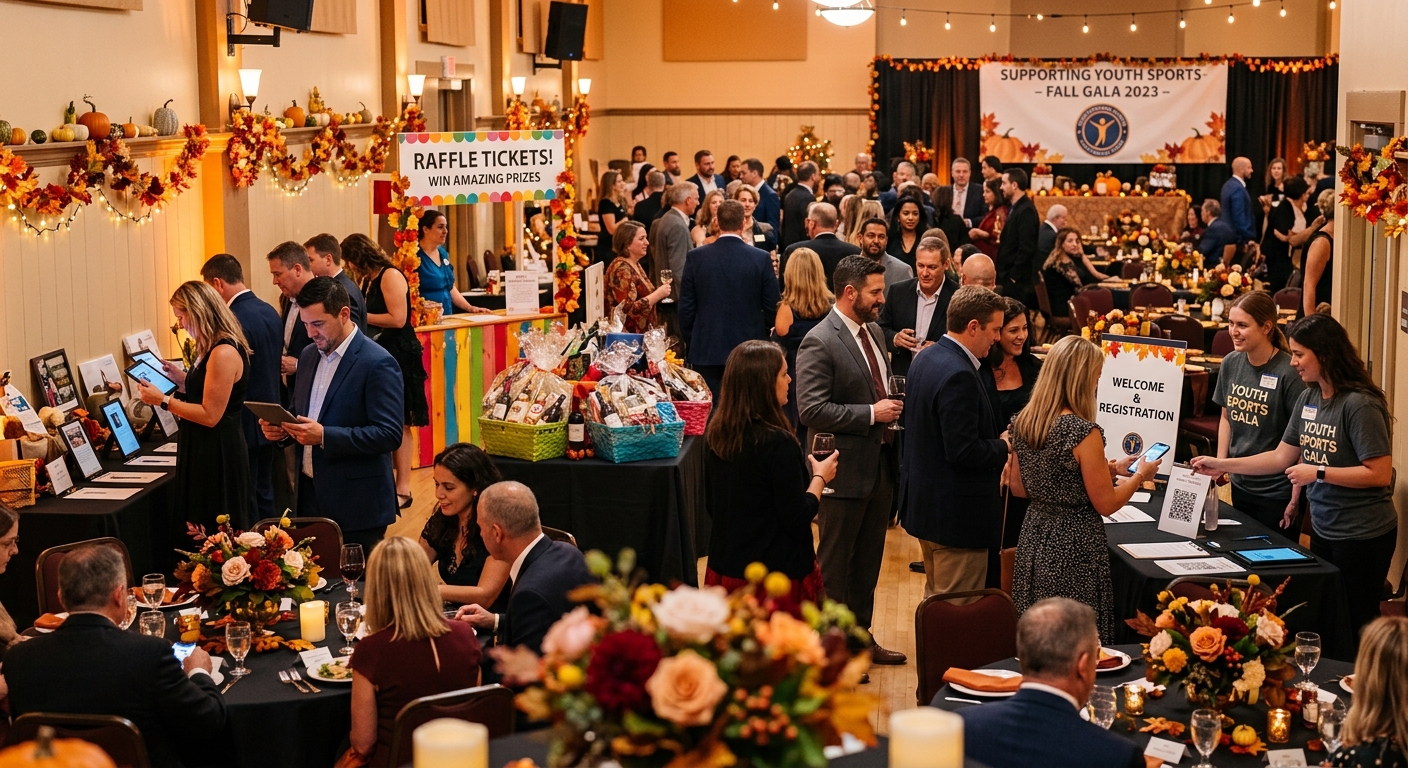
If you're planning a gala, benefit dinner, or community celebration this fall, you're already organizing logistics, securing a venue, and coordinating volunteers. What if that same event could generate revenue from ticket sales, silent auction bids, online raffle entries, product sales, AND donation pledges — all managed in one platform?
This is the complete playbook for turning your fall fundraising event into maximum mission funding.
Why Fall Fundraising Events Fail to Hit Their Potential
Most nonprofits plan their fall events the same way they've done for years: tickets on Eventbrite, donations on GoFundMe, auction items on BiddingOwl, and raffle tickets sold manually at the door. The result? You're paying 5-8% in platform fees across three different tools, manually reconciling data from multiple dashboards, and missing revenue opportunities because attendees don't know about your raffle or product sales.
According to Nonprofit Hub, the average nonprofit loses $500-$1,200 per event in avoidable platform fees. On a $10,000 fundraiser, Eventbrite's 3.7% + $1.79/ticket fee structure costs you $550+. OneCause charges 4-6%. Classy takes 5%. Those fees add up fast — and they come directly out of your mission funding.
The alternative? One platform that manages everything with 0% platform fees. Your attendees get a single event page where they can buy tickets, browse auction items, enter your raffle, purchase products, and make donations. You get one dashboard with real-time revenue tracking across all streams.
The 4-Stream Fall Fundraising Model
Successful nonprofit events in 2026 don't rely on ticket sales alone. They combine four revenue streams:
1. Event Ticketing
Your benefit dinner, gala, or community celebration is the foundation. But instead of treating ticketing as a separate logistical task, integrate it into your fundraising strategy. Attendees who buy tickets are already engaged supporters — make it easy for them to give more.
Best practices:
- Offer early-bird pricing to drive advance ticket sales
- Create VIP tiers with exclusive perks (reserved seating, meet-and-greet with speakers)
- Enable group ticket purchases for corporate tables
- Send Apple/Google Wallet passes for easy mobile check-in
2. Silent Auctions
Silent auctions generate an average of $3,000-$8,000 for nonprofit events according to Double the Donation. The key is making bidding accessible before, during, and after your event.
Revenue opportunities:
- Launch your auction 2 weeks before the event so remote supporters can bid
- Accept proxy bids from supporters who can't attend
- Extend bidding 24 hours post-event for procured items
- Feature high-value experiences (chef's table dinners, sports tickets, vacation packages)
3. Online Raffles
Raffles are the easiest way to boost event revenue. A $5 raffle ticket with a $500 prize can generate $2,000-$5,000 in additional funding. The challenge is compliance — 47 states regulate raffles, and manual ticket sales create legal risk.
Compliance best practices:
- Use a platform that handles winner selection and prize fulfillment
- Clearly state odds and prize details
- Verify your state's raffle licensing requirements
- Promote raffle entries in pre-event emails and social posts
4. Product Sales
Product fundraising isn't just for schools. Nonprofits can sell branded apparel, local artisan goods, or partner products (candy, coffee, baked goods) alongside their events. According to Fundraising.com, product fundraisers generate 40-60% profit margins.
Product ideas:
- Branded t-shirts and hoodies featuring your mission
- Locally-sourced goods (honey, jam, candles) from community vendors
- Candy and treat boxes via fulfillment partners like Treats Island
- Holiday gift sets timed for year-end giving season
How to Set Up Your Multi-Stream Fundraiser in 15 Minutes
The biggest barrier to implementing this model? Platform complexity. Most nonprofits assume they need separate tools for each revenue stream. Not anymore.
Step 1: Create Your Event Page
Set up your benefit dinner, gala, or community event with ticket tiers, date/time, and venue details. Enable QR code tickets and Apple/Google Wallet passes for seamless check-in.
Step 2: Add Your Silent Auction
Upload auction items with photos, descriptions, starting bids, and bid increments. Set your auction start and end times — bidding can run before, during, and after your event.
Step 3: Launch Your Raffle
Create your raffle with prize details, ticket price, and drawing date. The platform handles winner selection and notifications automatically.
Step 4: Add Product Sales
List products with photos, descriptions, and prices. Choose between inventory management (for items you have on hand) or fulfillment partners (for pre-packaged goods shipped directly to buyers).
Step 5: Enable Donations
Add a donation section to your event page with suggested amounts and monthly giving options. Supporters can donate alongside their ticket purchase or product order.
All five revenue streams live on one event page. Attendees see everything in one place. You manage everything from one dashboard.
Real-World Example: Grace Community Center's Fall Gala
Grace Community Center in Austin, Texas ran their annual fall gala in October 2025. In previous years, they used Eventbrite for tickets ($550 in fees), BiddingOwl for their silent auction ($320 in fees), and collected cash donations at the door.
In 2025, they switched to an all-in-one platform:
- 120 event tickets sold at $75 each: $9,000
- 45 auction items with 230 total bids: $6,400
- Online raffle (300 entries at $10 each): $3,000
- Branded t-shirt sales (80 shirts at $25): $2,000
- Direct donations: $1,800
Total raised: $22,200
Platform fees paid: $0
Amount saved vs. previous year's fees: $870
Grace Community Center's development director said: "We used to spend hours reconciling data from three platforms. Now we have one dashboard, one check-in process, and one donor database. We raised 40% more than last year and saved nearly $900 in fees."
Platform Comparison: Where Nonprofits Lose Money
| Platform | Ticket Fees | Auction Fees | Raffle Support | Product Sales | Donation Fees | Annual Cost (10K Event) |
|---|---|---|---|---|---|---|
| Eventbrite | 3.7% + $1.79/ticket | N/A | No | No | N/A | $550+ |
| OneCause | 4-6% | 5-7% | Yes | Limited | 5% | $600-$700 |
| BiddingOwl | N/A | $299-$599 base + 3% | No | No | N/A | $320-$650 |
| Classy | 5% | 5% | Limited | No | 5% | $500-$700 |
| GoFundMe | N/A | N/A | No | No | Donor tips (2-3%) | $200-$300 |
| FundMySquad | 0% | 0% | Yes | Yes | 0% | $0 |
On a $10,000 fundraising event, platform fees cost nonprofits $500-$1,200 per year. Over 5 years, that's $2,500-$6,000 that could have funded programs, staff, or services.
Marketing Your Multi-Stream Fundraiser
Once your event page is live, promotion is everything. Your goal: drive early ticket sales, auction previews, and raffle entries before event day.
Email campaign timeline:
- 6 weeks out: "Save the date" announcement with early-bird ticket link
- 4 weeks out: Auction preview email showcasing top 5 items
- 2 weeks out: Raffle launch email with prize details and entry link
- 1 week out: Final call for tickets + reminder that auction opens in 7 days
- Event day: "Auction is live" push notification
- Day after event: Thank-you email with impact stats and donor recognition
Social media strategy:
- Post daily auction item spotlights with "Bid now" links
- Share raffle testimonials from previous winners
- Create countdown graphics ("3 days until our fall gala!")
- Go live on Instagram/Facebook during the event to show real-time energy
- Post winner announcements for raffle and auction items
Influencer partnerships:
- Ask board members to share the event page on their personal networks
- Partner with local businesses to donate auction items in exchange for promotion
- Invite community leaders to speak at your event and promote to their followers
Post-Event Follow-Up That Drives Recurring Giving
Your event doesn't end when attendees leave. The highest-converting donor ask happens within 48 hours post-event.
Immediate follow-up (within 24 hours):
- Send thank-you email to all attendees with event photos
- Announce raffle winners and auction item pickup details
- Share total amount raised with impact statement
- Include "Make Your Gift Monthly" CTA button
One week post-event:
- Email supporters who didn't attend: "You missed a great night — here's how you can still help"
- Share behind-the-scenes video from the event
- Spotlight a program funded by event proceeds
One month post-event:
- Send impact report showing exactly how funds were used
- Invite supporters to your next event (build your year-round calendar)
- Ask for testimonials and reviews
According to Bloomerang, 45% of first-time event attendees will give again within 6 months if you follow up effectively. Your fall event is the beginning of a donor relationship — not the end.
FAQ
Q: Do I need a 501(c)(3) to run a raffle fundraiser?
Most states require nonprofits to have 501(c)(3) status and a raffle license to legally operate raffles. Requirements vary by state — some require registration, some limit prize values, and some ban online raffles entirely. Before launching your raffle, check your state's regulations through your Secretary of State's office or consult with a nonprofit attorney. FundMySquad's raffle tools are designed to support compliance, but legal responsibility rests with the organization.
Q: How do I price silent auction items to maximize revenue?
Set starting bids at 30-50% of fair market value to encourage early bidding. Use bid increments of 10% of the starting bid (e.g., $50 item starts at $25 with $5 increments). High-value items ($500+) should have detailed descriptions and multiple photos. Experience packages (wine tastings, concert tickets, golf outings) consistently outperform physical goods. Promote auction items in pre-event emails to build excitement.
Q: Can supporters who can't attend my event still participate?
Yes — and they should. Online auctions and raffles allow remote participation. Promote your event page to your full email list and social following, not just confirmed attendees. According to Network for Good, 25-35% of event fundraising revenue comes from supporters who don't attend in person. Make sure your event page is accessible to anyone, anywhere.
Q: What's the best way to collect payments at my event?
Use mobile check-in with QR codes at the door. Attendees show their ticket QR code (from email or Apple/Google Wallet), you scan it, and they're checked in. For auction payments and raffle entries, all transactions happen online — no cash handling or card swiping required. This reduces volunteer workload and speeds up check-in lines.
Q: How do I avoid donor fatigue with multiple revenue streams?
Frame each revenue stream as a different way to participate, not as multiple asks. Tickets get you in the door. Auctions let you win something. Raffles offer a chance at a big prize. Products give you a tangible keepsake. Donations support your mission directly. Supporters choose how they want to engage — you're not asking everyone to do everything.
Conclusion: Your Fall Event Is a Revenue Opportunity
Stop thinking of your fall gala, benefit dinner, or community celebration as "just an event." It's a fundraising opportunity with four revenue streams: tickets, auctions, raffles, and product sales. The organizations that combine all four in one platform raise 40-60% more than those who treat each stream separately.
You don't need to be a fundraising expert. You don't need a big budget. You just need the right tools — and a willingness to try something better than the status quo.
Ready to turn your fall event into your best fundraiser? Create your free nonprofit fundraiser in 15 minutes. No platform fees. No setup costs. Just more funding for your mission.
Related resources: